The countdown is on !

Check the schedule of films. The festival will be screening Pater and Angèle et Tony both of which have been nominated for Césars this year in the categories “Best film” and “Best direction” (Pater) and “Best first film” and “Best breakthrough performance” (Angèle et Tony)
How to fit this film into my blog, a film the audience may not even register as French (a Franco/Iranian/Romanian writer Yasmina Reza, a Franco-Polish director Roman Polanski, and a quartet of actors : [Kate Winslet, Jodi Foster, John C. Reilly and Christoph Waltz] hailing from Britain, Austria and the U. S.) ? Dare I pay tribute to an undeniably visionary director, yet persona non grata to many ? And can I do so without incurring the wrath of an audience and without being cast as the man’s defensor (which I am not) but admittedly, yes, as a fan of the artist ? Last year, I snuck in a review of Ghost Writer in conjunction with my chronicle of the Césars after they had awarded him the prize for Best direction, thus I felt (relievedly) vindicated in my admiration for Polanski’s chilling, atmospheric artistry. This year, word is he is a guest host, chosen to award Kate Winslet with an honorary César and has been nominated for Best adapted screenplay. So…
-.jpg)
Carnage is perhaps Yasmina Reza’s most unflinchingly brutal and arguably her most challenging play to pull off without losing emotional credibility : the tensions here escalate to near hysterical heights yet the mood remains strangely cool, hostile, and never turns grotesque. This is also perhaps one of the very rare cases where film direction suits the drama better than a stage direction could. Two words explain this : close-ups. The ever-shifting moods, modes of behaviour and expression (barely perceptible facial twitches, double takes, side glances…) would be lost to an audience in a dark theatre, but here are given their required screen time : for the play simply unravels one after another the varying portraits of our “civilized” selves. And it is tantalizing to watch. The cast is thrilling. But Jody Foster, a rare screen presence nowadays, particularly so : charming, unpredictable and devastating. Her spartan beauty, incisive eyes and lined features steal much of the camera’s attention and act in fact as landscape to the ensuing Carnage.
The film is a small, unnerving masterpiece that will have you laughing nervously and then rip you apart. TRAILER.
Quite frankly I wasn’t expecting to like this film. The reviews were generally unenthralled, a few occasionally applauded, somewhat condescendingly, the film’s “heartfelt humanity” : which in cinephilic speak translates as a (shudder!) popular, well-meaning but otherwise forgettable effort.
Still, perhaps because of my fondness for the sport, my irrepressible crush on Gérard Lanvin, or because whenever Olivier Marchal helms a project, I’m intrigued…. I gave the film a shot.
Yes, it is certainly unambitious, unpretentious, and anything but a sexy sell (Karina Lombard as the romantic interest is a negligeable plot point) : it’s a guy’s guy film about rugby that breaks no ground but stays rooted within the director’s (Philippe Guillard, veteran French rugby star) field of expertise and comfort zone.
And yes, I was actually won over by these spirited, if ill-adjusted characters, and through them bound to the group of buddies who came together to pull off a story dear to their hearts. It all felt like something of an improvised project: a cast of ex-rugby recruits, unscripted scenes, slightly sloppy editing, mishandled romantic narrative… in short, a totally winsome, fresh and fun flight away from high brow cinéma d’auteur.
“Intouchables”. I thoroughly enjoyed it.
There I said it.
Because now, an enthusiastic critical reception of this film has become problematic, ever since Variety’s scathing accusations of apparently blatant, overwhelming racism, while still, of course, summoning Harvey Weinstein to remake it, after considerable edulcoration and rewriting. Wholesaledly dismissive, not a single comment of Variety’s review perceptively pertains to the film’s direction, acting or style, simply to the Uncle Tom’s Cabin attitude the film supposedly revives and thus the film is entirely read through that lens.

Impossible therefore not to devote this blog to Variety’s reaction before getting to the film itself. Variety’s knee jerk response screams of the kind of infuriating political correctness whose notion of mutual respect and understanding presupposes eradicating differences altogether, and of the self-righteous finger pointing without consideration of a different cultural reality than one’s own. The film is not a satire, social, racial or otherwise; it is not prejudiced nor vicious. It is a comedy that, yes, exaggerates certain realities for the sake of comedy – that’s how comedies function – but there are truths to both characters’ backgrounds and behaviours beneath the layers of comedic effects. Honestly, the gap between the two men, Driss (Omar Sy delivers here a tender, natural and hilarious performance) and Philippe (François Cluzet, equally extraordinary… as usual), felt to me far more of a generational one than a social, physical or racial one. I am not sure I understand how the casting of Omar Sy, who is Senegalese rather than Algerian, is “telling” of anything, as Variety implies, but regardless, what matter here are not Driss’ ethnic origins but rather his youth, his energy, his imposing presence and powerful force of life that aren’t going anywhere and demand of Philippe to be reckoned with. Driss’ larger than life, in-your-face differences from Philippe, his vitality, physicality and his defiance are what’s needed for Philippe to emotionally come back to life. Driss understands this, and perhaps even deliberately decides to overplay the role he holds in Philippe’s life, as a result. Pegging this as racism, is missing the point of the film entirely. When Driss mocks contemporary art (which Les Inconnus and Yazmina Reza had done previously without exposing themselves to such disproportionate hostilities after “taking hoary potshots at high culture”) and conspires with Philippe to sell his own painting to a pompous collector, as well as when he mocks the (justifiably) ludicrous tree outfitted opera singer, or the teen-idol hairdo of the dandy boyfriend, it isn’t candour on his part that is the butt of the joke but the false pretentions of the upper-middle class that doesn’t see how silly it has become in its forms of entertainment.
I’m assuming that the directors Olivier Nakache and Eric Toledano hardly intended to create a racial polemic nor polarize either side, quite the opposite. Since, however, it appears Variety’s reviewer privileges racial issues over any other in the judgment of this film’s values, let’s mention that Olivier Nakache is a Sephardic Jew who began his career working with and being infused by the spirit of France’s comedic dream team [for a large part North African in fact : Gad Elmaleh, Jamel Debbouze, Atmen Kélif, and Omar Sy among others] as well as directing short features primarily concerned with social issues (Le jour et la nuit, Les petits souliers). If anything, the two directors might suffer from a care bear complex. Accusing them of racism is outlandish. They seemed to have been moved by a feel-good story which they chose to tell in a comedic fashion and employed the rhetorical tools that apply to the genre. And guess what ? It worked. People cried and people laughed and everyone generally felt pretty good.
It seems impossible to tune in to any French radio station without capturing and inevitably giving in to Ludovic Bource’s charming score for Michel Hazanavicius latest movie The Artist.

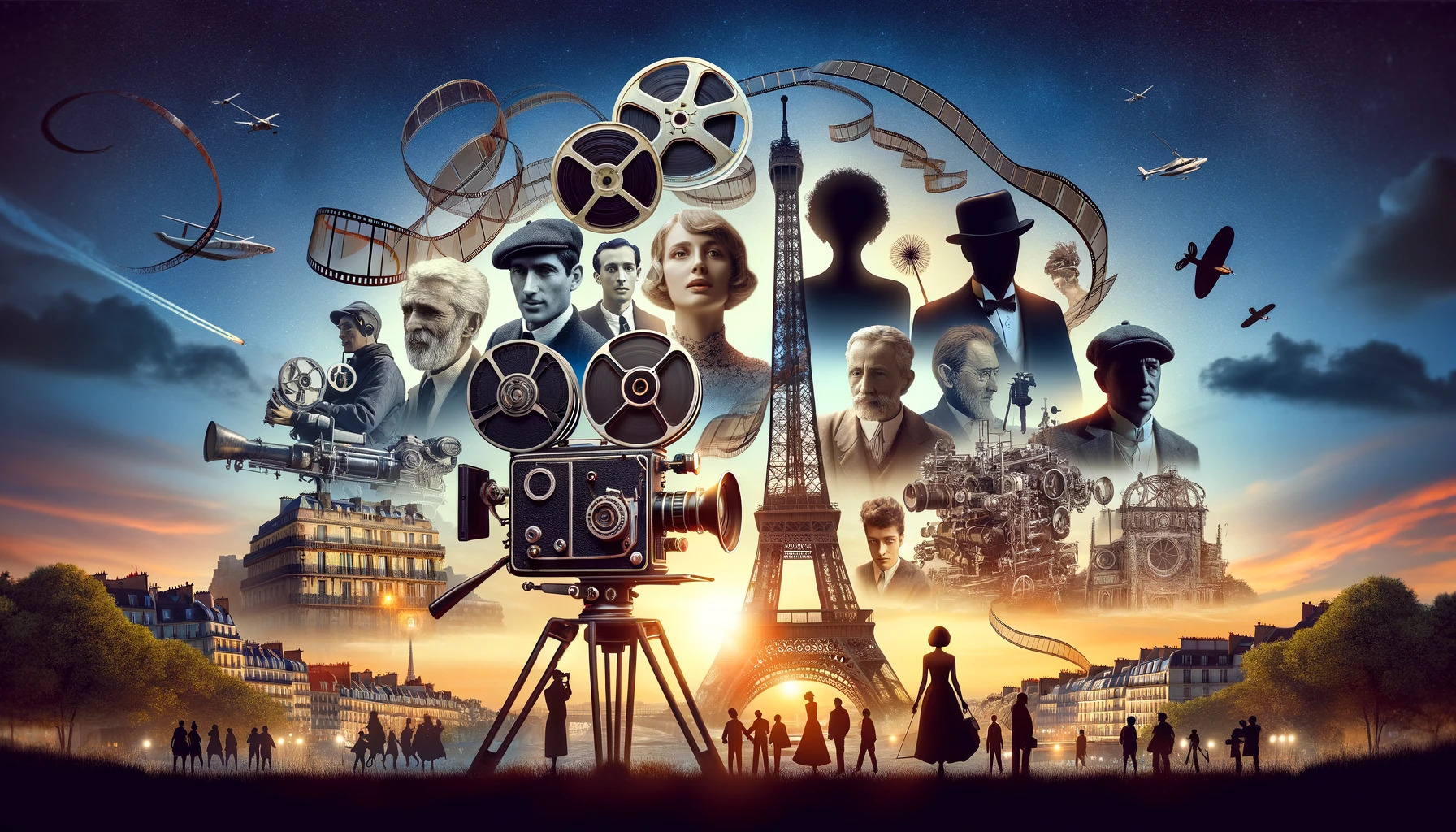
This delightful exercise in style is above all a skillfull hommage payed to the silent movies of the twenties. But beyond that, the film carefully reflects on the nature of this 7th art, letting us rediscover the magic of its beginnings and the wonder of powerful, purely visual storytelling. Also, there is something terribly refreshing about the success of a film that stands against everything the studio system has become since, and that appears to have revealed a nostalgic yearning in its enthused audience.
The plot is a classic one, or has become classic overtime. It chronicles the beguiling story of two movie actors whose hearts and careers cross tragically. Jean Dujardin, a mezmerizing composite of Valentino and Fred Astair, plays an older, silent movie star who haplessly chooses to dismiss a career in talkies and fades into oblivion while a young dancer (the delightful Bérénice Bejo) finds unprecedented success as the new “it” girl in the world of sound.
The first half is bewitching. Through some thrilling leg action, and a series of suggestive takes in a movie-within-the-movie, the film shows with economy and intensity George Valentin and Peppy Miller’s budding love (Peppy’s playful and tender caress of Valentin’s tailcoat is likely to go down as one of the most expressively sensual scenes in romantic comedy). The second half sadly loses some of its rhythm and magic, as it slumps along with Valentin’s sombre decline.
Still, the film is an enchantment, a throwback to the splendour, heroics and emotional candour of the time, and one that will leave you a little spellbound, a little sentimental, and wistfully humming its music for some time after…
Julie Delpy has little left to prove : an accomplished actress, screenwriter, director, producer, singer… With four directorial features under her belt (“Two days in New York” following “Paris” is rumouredly already a wrap), she seems to have signed here a pure pleasure project.
Skylab is a sweet, wistful (autobiographical?) evocation of a family gathering on the occasion of the matriarch’s (Bernadette Lafont) 67th birthday in 1979. This joyful company’s mood and movements follow Britanny’s climactic temperament as arguments escalate and deescalate between sunny breaks with the kind of harmless intensity that results from the mix of affection and exasperation that only a family can withstand. The gentle, aging lunatics, the political antics and sexual hilarities perhaps hint, with a kind of winsome disinhibition, to the generation’s dispirited malaise : the realization of its victories vanishing, of its purpose lost, of its time gone. The generational worldweariness that would usher in the 80’s is in fact embodied in the precocious, bespectacled pre-teen daughter (Lou Alvarez), whose bittersweet coming of age brings some sobering reflection and responsibility to the casual frivolity of her parents’ generation (Delpy and the wonderfully chameleonic Eric Elmosnino).
Polisse is an uncompromising, socially stirring and angst-ridden punch in the gut. It chronicles the harrowing cases that everyday come through the office of the juvenile protection brigade, the truly undersung heroes of the French police system. Inspired by a documentary, Maïwenn Le Besco directs an unflinching professional portrait and follows the members of this brigade on the job with remarkably tough honesty, as well as off the job, with less sobriety, more melodrama and sentimental cliché. The difficult emotion comes naturally from the terrible challenges these officers face every day : the tightrope walking over an emotionally grey area, the hierarchical wrestling matches, exasperating bureaucratic pitfalls, and their total bafflement in the face of incomprehensible acts of monstrosity. Very loosely, even frantically structured, the film moves more like a documentary (though the director’s self casting as a fly-on-the-wall photograph – besides adding a predictable love-interest for Joeystarr’s character [whose screen magnetism is undeniable and performance admittedly blew me away] – is a mise en abîme that unnecessarily pseudo-intellectualizes a film that functions most powerfully at a cinéma-vérité gut level rather than meta-commentary).

The film is in fact perhaps too ambitious, stretched thin in too many dramatically intense directions. Maïwenn forces an intimate connection with each member of a huge ensemble cast within a far too concentrated time period and at a wildly intense pace. The tone therefore continuously shifts suddenly without explanation in a collage of character conflicts and romances. There just isn’t enough room to provide these characters with personal lives of credible depth. The result: an office dispute escalates off key into a fit of baffling hysterics, and blossoming romances line up cringingly bad seduction clichés.
In short, the trauma of the cases that make up the days of these officers is enough drama. The rest reads like petty soap opera material. Still Maïwenn’s heart and head are in the right place, and considering the seriousness and urgency of her purpose, the character shortcomings should not be held against her. Polisse is a film that must imperatively be seen. TRAILER.
Classically structured, Tu seras mon film aligns itself with the dark, disheartening naturalistic novels of the XIXth c. where a man’s soul is lost to the dictates of a dehumanizing environment. Rather ironic in this case that the setting should be the terroir par excellence of civilized good taste and “joie de vivre”. Indeed, a glorious St Émilion vineyard is invested with doom as it hosts the sinister unraveling of filial dynamics…

The film centers on the pitiless master of a prestigious winery (a formidable Niels Arestrup) who favours the gifted son of his cancer stricken manager (a magnificent Patrick Chesnais whose face seems to espouse the topographical features of the land he harvests) to his own. Ensues a hateful and hurtful battle for succession not so much between the enraged natural heir and the (not so) reluctant adoptive one, but between the cruel patriarch and his begotten black sheep. Arestrup’s villainy reaches Shakespearian heights yet avoids operatic melodrama : he is cool and ferociously cutting. And Lorànt Deutsch excels as both the fragile and fruitless offspring, whose tenacious frailty is both pathetic and disarming. The gorgeous, smooth cinematography alternates looming widescreen aerial shots full of ominous beauty, with heady, dizzying close character shots. An excellent, lean, full bodied French drama, as good as they come.
Only, please, I beg that this fine, incisive vintage be not remade into a diluted Californian one.
Trailer : http://youtu.be/MgwTkI0vKrM
A furious war of love and life waged at all costs against illness and despair.

Certainly, a vertiginous endeavour for the writers/directors/actors (Valérie Donzelli and Jérémie Elkaïm), the film’s subject matter would typically send audiences running for the hills : it promises to chronicle the real-life battle of Jérémie Elkaïm (Romeo) and Valérie Donzelli (Juliette) for the life of their baby, struck with brain cancer at birth.
Not all battles are won, but Romeo and Juliette never once abandon their fight and never once allow death to enter their lives. The film is harrowing, dizzying, honest and enchanting… full of song and laughter. It didn’t jerk a tear out of me, but rather had me in stitches and left me feeling neither battered nor powerless but willful, grateful, and armed for whatever life has in store.
trailer : oY7LGzaebMc
Predictable from beginning to end, but who cares? La Proie is completely enjoyable, and damn it, it’s a welcome change to see a French guy performing stunts instead of Bruce Willis or Tom Cruise. Also, it’s refreshing to see a generation of young French directors (here: Eric Valette) trying their hand at a genre overwhelmingly dominated by the Scotts, Bays and Bruckeimers of the world, and, for once, dropping the European predilection for prolonged, intimate and dialogic efforts in order to privilege the grand cinematic spectacle: the occasional light fare that’s fun, sensational and yes, forgettable.

Without the fiercely magnetic Albert Dupontel (as well as the regrettably underused Sergi Lopez), who channels something of De Niro circa Cape Fear via Harrison Ford’s Richard Kimble, the film’s heavyhanded screenplay – owing much to Roy Huggins and not quite getting away with clumsy cinematographic tributes to Hitchcock – is worth hardly more than one of the more impressive Sunday night telefilms. Regardless, the skillfully shot chase sequences and the ferocious fight scenes definitely pop on a wide screen and earn the film its spot in theatres. Worth noting: Stéphane Debac and Natacha Régnier both escape the caricatural pitfalls of their characters and deliver villainous performances with bone-chilling credibility. By comparison, Taglioni, Hazanavicius and Soualem trapped in the cop-genre’s clichés (and feebly tackling unnecessary gender issues) are simply insubstantial.